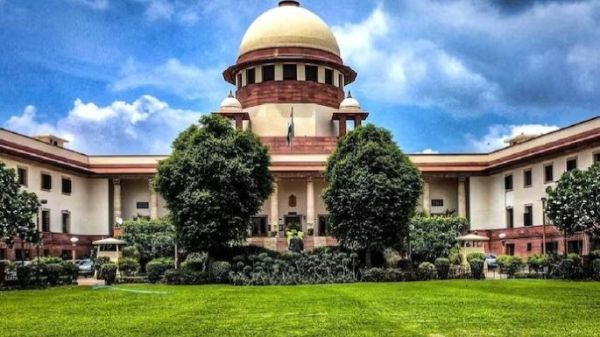
New Delhi: The Supreme Court asserted on Monday that only vehicles meeting BS-VI emission standards should be permitted to operate in Delhi during the pollution-heavy winter season. Hearing ongoing suo motu proceedings on the Delhi-NCR air crisis, a bench comprising Chief Justice of India Surya Kant and Justices Joymalya Bagchi and V Mohana signalled its intent to uphold strict winter curbs on polluting transport, stating, “We are clear we will allow only BS-VI vehicles in Delhi, if not NCR.”
While backing strict vehicular restrictions, the bench attributed the national capital’s relatively mild November air quality largely to luck and weather rather than human intervention.
Noting that meteorological factors had prevented air quality from plunging into the ‘severe’ category, the court remarked, “We have also been lucky this winter. There is no severe category pollution till now because of the winds.”
When Additional Solicitor General Aishwarya Bhati, representing the Commission for Air Quality Management (CAQM), highlighted official anti-pollution efforts, the bench countered with “Primarily nature,” though Bhati maintained that administrative enforcement had also played a role.
Meteorological data backs the court’s assessment, though experts warn the current relief is precarious. According to the India Meteorological Department’s November 23 forecast, afternoon northwesterly winds reaching 10 kmph—paired with a deeper atmospheric mixing layer—have helped disperse surface pollutants rather than trapping them. Still, Delhi’s air quality has oscillated between ‘poor’ and ‘very poor’; the CAQM had to trigger Stage III of the Graded Response Action Plan on November 6 over fears of a ‘severe’ spike, only to revoke the emergency curbs on November 17 when conditions eased.
Looking beyond immediate winter bans, the apex court mooted a comprehensive, five-year strategy to phase out polluting commercial traffic across the entire National Capital Region (NCR) without choking off essential supplies.
“Why not have this during five years? To ensure that no single commercial vehicle enters Delhi,” the bench proposed, acknowledging that residents still need daily necessities like fruits and vegetables. To solve this, the court suggested building border warehouses where goods could be offloaded and ferried into the capital via battery-operated or clean-fuel vehicles—a transition it admitted cannot happen overnight or even next year, but should be targeted over half a decade. Emphasizing that cross-border traffic fuels regional smog, the bench stressed that its eventual directives must span the wider NCR rather than Delhi alone.
These judicial deliberations align with existing local curbs and scientific data on pollution sources. On November 7, the Delhi government formalized an annual ban running from November 1 to January 31 that bars non-Delhi registered BS-IV and older commercial goods vehicles—across light, medium, and heavy categories—as well as buses, while exempting CNG, electric, and emergency vehicles. To enforce this, authorities have stationed special teams and automatic number plate recognition cameras at key border checkpoints, including DND, Rajokri on the Delhi-Jaipur highway, Ghazipur, Singhu, Tikri, and Badarpur.
Meanwhile, source-apportionment estimates for November 23 from the Indian Institute of Tropical Meteorology’s Air Quality Early Warning System underscore the need for coordinated regional action. Data revealed that local transport accounted for roughly 21.5% of Delhi’s PM2.5 load, whereas external sources outside the capital contributed 60%. Stubble burning accounted for less than 1% of the pollution on that specific day, though its seasonal impact fluctuates widely. Assisted by senior advocate Aparajita Singh as amicus curiae, the Supreme Court noted it will continue evaluating both short- and long-term measures to tackle the recurring crisis.
Contact to : xlf550402@gmail.com
Copyright © boyuanhulian 2020 - 2023. All Right Reserved.