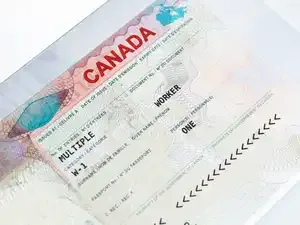
Canada has removed the 90-day limit for holding certain work permit applications while employers await Labour Market Impact Assessment (LMIA) decisions. Immigration officers must now wait for a decision on the pending LMIA before deciding on the linked work permit application.
Canada has removed the 90-day limit on holding certain work permit applications while employers await a decision on their Labour Market Impact Assessment (LMIA), giving eligible foreign workers more time when processing delays occur.
Immigration, Refugees and Citizenship Canada (IRCC) updated its instructions to immigration officers, directing them not to decide on a work permit application under the Temporary Foreign Worker Program (TFWP) until a decision has been made on the employer’s pending LMIA.
Also read: Canada’s Ontario reopens regional immigration initiative for skilled workers seeking permanent residence
Previously, officers could hold such applications for a maximum of 90 days while awaiting the LMIA decision. Under the revised instructions, this fixed limit no longer applies.
(Join our ETNRI WhatsApp channel for all the latest updates)
The change concerns applications eligible for concurrent processing, which allows workers already in Canada to apply for a TFWP work permit while their employers await an LMIA decision.
Who is eligible for concurrent processing?
To qualify, a worker’s existing work permit must be due to expire within two weeks or less. The employer must also have submitted the LMIA application sufficiently early to have reasonably expected Employment and Social Development Canada (ESDC) to process it before the existing permit expired.
On August 21, 2026, IRCC extended the concurrent processing time limit from 60 days to 90 days. The latest change removes the 90-day cap on waiting for the LMIA decision before officers decide on the associated work permit application.
Also read: Canada study permit wait rises to 7 weeks for Indians; work permits remain at 11 weeks
The updated instructions do not remove the requirement for employers to obtain a positive or neutral LMIA before a foreign worker can be issued a new work permit or extend an existing one under the TFWP.
An LMIA is issued by ESDC to assess whether an employer needs to hire a foreign worker and whether a qualified Canadian citizen or permanent resident is available for the position.
What happens to workers while applications are pending?
Workers who apply to extend their work permits before their existing permits expire can benefit from maintained status. This allows them to continue working in Canada under the conditions of their previous permits while IRCC processes their applications.
The revised instructions address the waiting period for eligible applications linked to pending LMIAs. However, workers must still meet the applicable requirements, and the change does not guarantee that a work permit will be approved.
LMIA restrictions remain in several Canadian cities
The change comes as Canada continues to restrict some LMIA applications in areas with high unemployment.
As of October 2026, employers in 30 urban areas face a refusal-to-process measure for LMIA applications covering non-exempt jobs that pay less than 120% of the median provincial or territorial wage.
The restrictions apply from October 9, 2026, to January 7, 2027, in affected census metropolitan areas, including Toronto, Vancouver, Montreal, Edmonton, Calgary, Ottawa-Gatineau, Halifax, Fredericton and Regina.
The measure applies to areas where unemployment is 6% or higher under a federal policy introduced in September 2024. ESDC updates the list of affected regions quarterly.
Montreal and Laval also remain subject to a separate moratorium introduced by ESDC at the Quebec government’s request in September 2024 and extended in November 2025. For foreign workers, the key distinction is that the revised processing instructions provide additional flexibility while an eligible LMIA is pending, but existing eligibility requirements and regional hiring restrictions continue to apply.