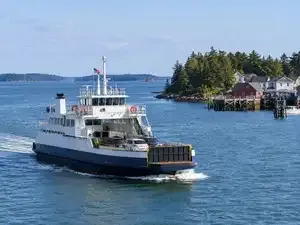
Representative AI image of a coastal ferry providing an essential transportation link between island communities and the mainland. Image Credits: ChatGPT.
For six island communities off the Maine coast, the ferry is more than a convenient way to travel. It is an essential connection for residents, workers, vehicles, and freight moving between the islands and the mainland. The Maine State Ferry Service serves Vinalhaven, North Haven, Islesboro, Swans Island, Frenchboro and Matinicus, linking them to terminals at Rockland, Lincolnville and Bass Harbour. State law recognises the ferries as part of Maine’s highway system because they carry vehicles and are the only method of vehicular transportation available to and from these islands.
According to Maine Department of Transportation projections, the estimated cost of running the ferry system in fiscal year 2024 was $15.78 million. This cost was supported by $6.31 million in state funds and another $6.31 million in fares, leaving an estimated shortfall of $3.16 million. The data shows the challenge of running a transport network in which fares cover only half the costs.
Six island communities, one vital link
Maine State Ferry Service runs ferries between Rockland and Vinalhaven, North Haven and Matinicus, and Bass Harbour to Swans Island and Frenchboro and from Lincolnville to Islesboro. Apart from the passengers, these ferries also transport cars, trucks, and cargo, thus making these ferries integral parts of the day-to-day economy of the islands. For communities that need constant access to the mainland, the ferry service has a role that goes beyond a typical commercial ferry route.
MaineDOT also noted that the islands are largely populated fishing communities. Transport options on the islands are limited, which makes the ferry system even more important once residents reach the mainland port facilities. This purpose of the system accounts for the fact that Maine treats the ferry service in a different manner than any other passenger service. Under Maine law, the ferry system is considered a part of the state’s transportation network.
Why taxpayers carry half the operating bill
The funding system is designed based on a 50-50 funding system. MaineDOT is mandated to cover at least 50% of the ferry system’s cost through fees from the users and the rest through the Highway Fund. Capital costs of the ferry services are paid by MaineDOT. The projection made by the department for the next five years demonstrated how fast the operating requirement would increase. Cost was expected to be $14.45 million in FY2023 and $15.78 million in FY2024. Then $15.33 million in FY2025, $15.79 million in FY2026 and finally $16.26 million in FY2027.
The matter is not about mere navigation. A ferry boat would need qualified personnel, fuel, maintenance, terminal facilities and other such operational factors. The difference with a road is that the ferry would need to move the huge boat in a scheduled way irrespective of how many customers it carries in each trip. The Maine approach recognises this fact.
 Rising fares and the cost of staying connected
Financial sustainability has required changes to the tariffs charged to passengers. The fares currently in force, starting June 1, 2025, vary by route and season of travel. A round-trip ticket for an adult passenger is priced anywhere from $10.25 to $15.75 off-peak on all routes except Matinicus, which costs $25. Vehicle fares are higher, ranging from $30 to $41.50 off-peak for a round trip and from $42.50 to $55 during peak season, with Matinicus charging the highest vehicle fare.
Thus, the financial issue goes beyond balancing an annual transport budget. The rise in ferry fare is helpful in meeting the statutory revenue requirement, while increased fares can have implications for the island’s residents, local businesses, and the delivery of goods. Such issues are embedded in the legislation. There is an account for the Marine Highway in Maine, as the ferries are deemed to be an integral component of the highway system and the only possible means of vehicle transportation to the six islands. However, the state’s contribution may not be above 50 % of the budgeted revenues covering operating costs.
According to Maine Department of Transportation projections, the estimated cost of running the ferry system in fiscal year 2024 was $15.78 million. This cost was supported by $6.31 million in state funds and another $6.31 million in fares, leaving an estimated shortfall of $3.16 million. The data shows the challenge of running a transport network in which fares cover only half the costs.
Six island communities, one vital link
Maine State Ferry Service runs ferries between Rockland and Vinalhaven, North Haven and Matinicus, and Bass Harbour to Swans Island and Frenchboro and from Lincolnville to Islesboro. Apart from the passengers, these ferries also transport cars, trucks, and cargo, thus making these ferries integral parts of the day-to-day economy of the islands. For communities that need constant access to the mainland, the ferry service has a role that goes beyond a typical commercial ferry route.
MaineDOT also noted that the islands are largely populated fishing communities. Transport options on the islands are limited, which makes the ferry system even more important once residents reach the mainland port facilities. This purpose of the system accounts for the fact that Maine treats the ferry service in a different manner than any other passenger service. Under Maine law, the ferry system is considered a part of the state’s transportation network.
Why taxpayers carry half the operating bill
The funding system is designed based on a 50-50 funding system. MaineDOT is mandated to cover at least 50% of the ferry system’s cost through fees from the users and the rest through the Highway Fund. Capital costs of the ferry services are paid by MaineDOT. The projection made by the department for the next five years demonstrated how fast the operating requirement would increase. Cost was expected to be $14.45 million in FY2023 and $15.78 million in FY2024. Then $15.33 million in FY2025, $15.79 million in FY2026 and finally $16.26 million in FY2027.
The matter is not about mere navigation. A ferry boat would need qualified personnel, fuel, maintenance, terminal facilities and other such operational factors. The difference with a road is that the ferry would need to move the huge boat in a scheduled way irrespective of how many customers it carries in each trip. The Maine approach recognises this fact.
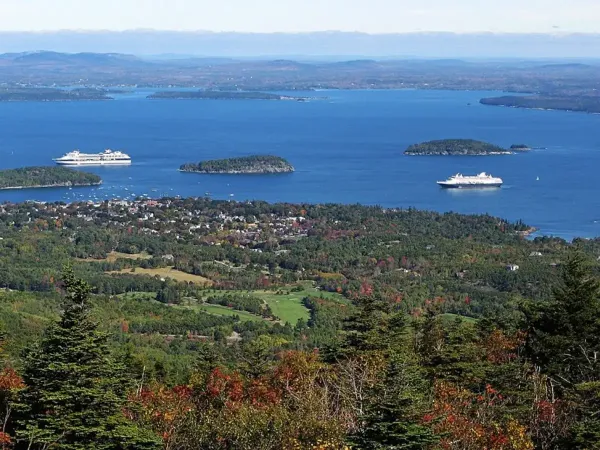
Linking six island communities with the mainland, the Maine State Ferry Service offers essential transportation for locals. Image Credits: Wikimedia Commons.
Financial sustainability has required changes to the tariffs charged to passengers. The fares currently in force, starting June 1, 2025, vary by route and season of travel. A round-trip ticket for an adult passenger is priced anywhere from $10.25 to $15.75 off-peak on all routes except Matinicus, which costs $25. Vehicle fares are higher, ranging from $30 to $41.50 off-peak for a round trip and from $42.50 to $55 during peak season, with Matinicus charging the highest vehicle fare.
Thus, the financial issue goes beyond balancing an annual transport budget. The rise in ferry fare is helpful in meeting the statutory revenue requirement, while increased fares can have implications for the island’s residents, local businesses, and the delivery of goods. Such issues are embedded in the legislation. There is an account for the Marine Highway in Maine, as the ferries are deemed to be an integral component of the highway system and the only possible means of vehicle transportation to the six islands. However, the state’s contribution may not be above 50 % of the budgeted revenues covering operating costs.