
Naveen Gupta, Bareilly
I have every right to generate waste, but I have no responsibility to control its impact or help clean it up. This scathing comment of the Supreme Court of the country is not just a legal observation, but it is a slap on the hypocritical face of our modern Indian society, which we see every morning throwing garbage outside our homes. When the Supreme Court expanded the scope of the Bhopal Municipal Corporation case to the entire country, the judiciary was actually highlighting the invisible crisis engulfing our cities, which we often blame on the municipal bodies.
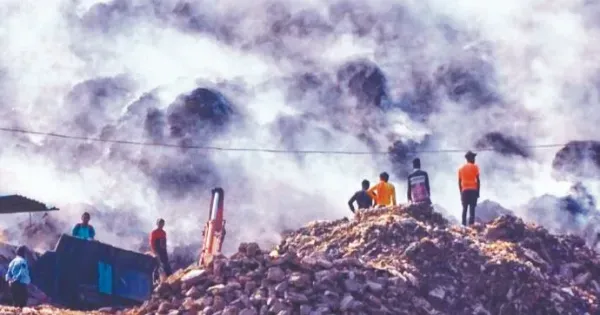
The truth is that the mountains of garbage in cities like Mumbai, Kolkata, Ahmedabad and Delhi as well as Lucknow and Kanpur are monuments to our collective civic apathy rather than the failure of governments. Amidst this depressing scenario, when we look towards the city of Indore in Madhya Pradesh, all our excuses for cursing the system fall flat. Indore, which has consistently earned the distinction of being the cleanest city in the country, has proved that if administrative will and public participation come together, miracles are possible.
In Indore, roads are cleaned at night, people wait for garbage trucks and even every child there thinks before throwing anything on the road. The question arises that if Indore can be cleaned with the resources of our own country and within the ambit of the same law, then why not other cities of the country? Why are metropolitan cities like Delhi, Mumbai and Kolkata forced to get buried under heaps of garbage? The answer is simple, the secret of Indore's success is not its infrastructure, but the changed thinking and consciousness of its citizens, which is sorely lacking in the rest of the country.
We have transformed into such a strange society, which is desperate to make its luxurious rooms shine, but as soon as the feet step outside the door, it considers the entire road as a garbage dump. Despite the stringent standards of solid waste management rules, the ground reality remains the same. Segregating wet, dry and household hazardous waste from homes is still an unnecessary headache for most Indians. We put biological, chemical, electronic and plastic waste in a single bag and throw it on the road with the assurance that it is only a sanitation worker's job to clean it. This thinking of the society is not only legally wrong, but also completely inhumane in human and practical terms.
We are forgetting the bitter reality that if we are destroying our own city through carelessness and garbage, then it is also important to keep in mind that when the entire city gets destroyed, then how can our own house remain safe? Pollution, diseases and poisonous groundwater do not stop at the walls of one's house. Today the rivers of our country are dying due to solid waste, the land has become poisonous and the smell of plastic has permeated the air. Despite this, apart from cursing the system, our educated class is not ready to make even the slightest change in its lifestyle. Making fun of the ban on single-use plastic has become our habit.
It has to be understood that the garbage crisis will not be solved merely by giving a six-week ultimatum to the district magistrates or by collecting fines by the district administrations. Unless every citizen of the country, every household and every institution, like the citizens of Indore, does not internalize the fact that the person who produces garbage is primarily responsible for its disposal, no law can make this country clean. The directive to take strict action like temporarily stopping the supply of electricity or water if rules are broken is a warning that nature and the judiciary will no longer tolerate laxity. The time has come for us to change our suicidal thinking, because if the city sinks, even our homes will not be saved.
It is the biggest tragedy of our country's administrative system and civic sense that today the courts of the country are awakening us on every basic issue of the society. Be it the problem of waterlogging in cities, deadly potholes on the roads or mountains of garbage standing on the banks of settlements, until the hunter of the judiciary moves, neither our huge administrative staff wakes up from its deep sleep nor the common citizens become conscious about their duties. To enforce the rules, the courts have repeatedly issued warnings like cutting off electricity and water, making it clear that our local institutions and municipal bodies have completely failed in fulfilling their responsibilities. If only the Supreme Court of the country has to decide how the garbage of which city will be collected and who will be responsible, then what is the justification for this heavy-handed government system and local self-government?
Contact to : xlf550402@gmail.com
Copyright © boyuanhulian 2020 - 2023. All Right Reserved.