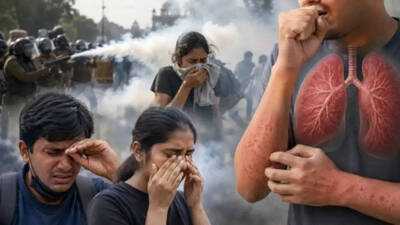
In Central Delhi, ongoing protests related to the NEET paper leak have led to the deployment of tear gas by authorities as a crowd-control measure. While this method is intended to disperse crowds temporarily, it can result in immediate discomfort, particularly for individuals with asthma, respiratory issues, or other health conditions.
What Exactly is Tear Gas? Understanding Tear Gas
Despite its name, tear gas is not a gas but rather a mixture of chemical irritants that are dispersed as tiny particles in the air. These particles can irritate sensitive tissues in the body, leading to a protective response that results in symptoms such as excessive tearing, coughing, sneezing, and discomfort, prompting individuals to vacate the area.
Symptoms of Tear Gas Exposure Effects on the Body
Symptoms typically manifest within seconds to minutes after exposure, primarily impacting the eyes and respiratory system. Common reactions include:
- Severe tearing and burning sensations in the eyes
- Redness and blurred vision
- Continuous coughing
- Burning or sore throat
- Runny nose
- Tightness in the chest
- Difficulty in breathing
- Skin irritation or redness
While most healthy individuals recover quickly after moving to fresh air, those with pre-existing conditions may experience more severe symptoms.
Who is Most Vulnerable? At-Risk Groups
Although the effects of tear gas are generally temporary, certain populations are at a heightened risk for serious complications. This includes individuals with asthma, chronic lung diseases like COPD, children, the elderly, pregnant women, and those with existing eye conditions. For these groups, exposure can lead to asthma attacks, prolonged respiratory issues, or persistent eye irritation that may require medical intervention.
Long-Term Health Implications Potential Long-Term Effects
For the majority, symptoms subside once the irritants are cleared from the body. However, repeated or prolonged exposure, especially in confined spaces, can lead to ongoing issues such as persistent eye irritation, chronic coughing, skin inflammation, and exacerbation of existing respiratory conditions. Anyone experiencing lingering symptoms after leaving the area should seek medical help immediately.
First Aid for Tear Gas Exposure Immediate Response Steps
To minimize irritation and prevent complications, it is crucial to act swiftly. Recommended first aid steps include:
- Evacuate the area and inhale fresh air.
- Avoid rubbing your eyes to prevent further irritation.
- Thoroughly rinse eyes with clean water or sterile saline.
- Gently wash exposed skin with soap and water.
- Carefully remove contaminated clothing and wash it before reuse.
- Seek emergency medical assistance if breathing difficulties, severe eye pain, or blurred vision persist.
Preventing Tear Gas Exposure Reducing Risk Factors
In situations where tear gas may be used, experts advise staying away from affected areas, wearing protective goggles instead of contact lenses, using a well-fitted mask to limit inhalation of particles, and opting for long-sleeved clothing to reduce skin exposure. If tear gas is deployed, evacuating the area immediately is essential.
While designed as a non-lethal crowd-control agent, tear gas can cause significant irritation to the eyes, lungs, skin, and airways, particularly in vulnerable populations. Early recognition of symptoms, adherence to first-aid protocols, and prompt medical attention for persistent symptoms can help avert serious health complications.
Contact to : xlf550402@gmail.com
Copyright © boyuanhulian 2020 - 2023. All Right Reserved.