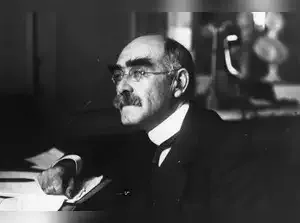
Rudyard Kipling was one of the most celebrated literary personalities of his time, widely recognized for his mastery over language and storytelling. He was born on December 30, 1865, in Bombay (now Mumbai), during the British colonial era. Growing up in India exposed him to diverse cultures, landscapes, and traditions, all of which later became major elements in his writing.
Kipling’s early life was signified by a transition to England for education, but his connection to India remained strong and deeply impacted his creative voice. He began his career as a journalist before rising to international fame as a writer of fiction, poetry, and essays. His works like The Jungle Book and Kim, featured his vivid imagination and ability to bring complex human emotions to life. His poem If remains to inspire readers with its timeless message about resilience and character.
In 1907, Kipling made history by becoming the youngest recipient of the Nobel Prize in Literature. His writing often delved into themes of identity, morality, power, and human nature. Despite debates surrounding some of his perspectives on empire, his literary contributions remain significant, especially his deep understanding of how words influence thought and behavior.
Quote of the Day by Rudyard Kipling
“Words are, of course, the most powerful drug used by mankind.”
Meaning of the Quote of the Day
In this quote Rudyard Kipling draws a deeply insightful parallel between language and substances that influence the human mind. A drug does not just act on the body, it changes perception, mood, and behavior. In the same way, words have the ability to enter the mind quietly and reshape how we think, feel, and react to the world around us.Language has a unique psychological force. Unlike physical actions, words function internally, impacting emotions at a deeper level. A few encouraging words can boost confidence and inspire action, while negative or careless language can trigger fear, doubt, or emotional pain. This ability to change inner states is what makes words so powerful they do not just explain reality, they actively shape it.
Kipling’s comparison also features the idea of suggestion and persuasion. Just as certain substances can create dependency, repeated words and concepts can condition the human mind. Political speeches, advertising slogans, and social narratives often rely on repetition and emotional appeal to influence public thinking. Over time, individuals may begin to accept these ideas as truth, illustrating how language can guide beliefs and even control behavior without force.
Moreover, words possess a dual nature, much like medicine and poison. The same language that heals can also harm. Gentle communication can comfort someone in distress, while harsh words can leave emotional scars that last for years. This duality reinforces Kipling’s warning: words must be used with awareness, because their effects are not always visible but can be deeply lasting.
Ultimately, Kipling suggests that language is not just a means of expression, it is a force that shapes human consciousness. Words influence identity, relationships, decisions, and even the course of history. By comparing them to a powerful drug, he highlights both their transformative potential and the responsibility that comes with using them.
Why the Quote Feels So Relatable
This quote remains to resonate because it reflects a universal human experience.Everyone, at some point, has felt the emotional impact of words. A kind remark can stay with someone for years, offering comfort and confidence. At the same time, a harsh or careless statement can leave lasting emotional wounds.
In today’s world, the relevance of this idea has only intensified. With constant communication through social media, news platforms, and digital conversations, words travel faster and reach wider audiences than ever before. A single post can influence opinions, spark movements, or even create conflict. People often form beliefs based on what they read or hear, showing just how powerful language can be. The quote also feels relatable because it emphasizes something deeply personal, our connection to language. Words shape how we see ourselves and others. Encouraging words can motivate someone to achieve their dreams, while negative words can create doubt and insecurity. In relationships, careers, and society as a whole, communication has a central role in shaping outcomes.
Kipling’s observation reminds us that words are not harmless. They carry weight, intention, and consequence. Just like a powerful drug, they must be used carefully. This timeless truth is why the quote continues to resonate across generations, making it as meaningful today as it was when Kipling first expressed it.