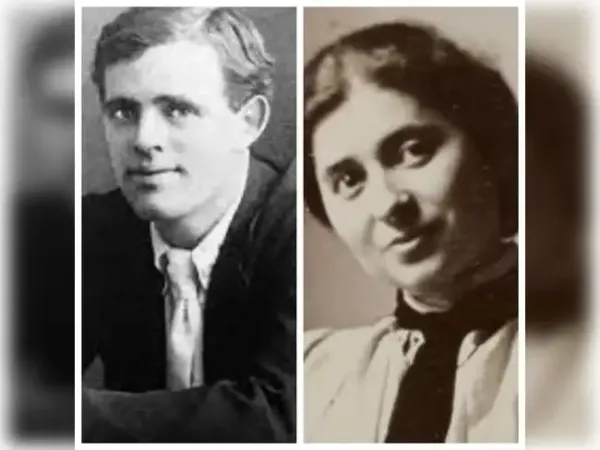
As Valentine’s Day 2026 approaches, love is often reduced to abbreviated messages and fleeting gestures. Yet history holds reminders of a slower, more exacting form of intimacy, one built on long letters, restless self-examination and the courage to confess uncertainty. Among the most striking examples of such correspondence is the exchange between American writer Jack London and Russian-American intellectual Anna Strunsky, a relationship defined as much by philosophical tension as by emotional longing.
Their letters reveal a romance that unfolded not through physical closeness but through language, probing, self-doubting and profoundly human. In them, London, famed for tales of survival and raw masculinity, appears unexpectedly vulnerable, wrestling with feeling, identity and connection.
Strunsky admired London’s force and originality, while London found himself unsettled by her sharp mind and emotional intensity. They were, as he later wrote, bound by something larger than compatibility: temperament. It was this sense of being “large,” of containing contradictions and universes within themselves, that drew them together.
“Did I say that the humans might be filed in categories? Well, and if I did, let me qualify — not all humans.
You elude me. I cannot place you, cannot grasp you.”
Rather than asserting possession or certainty, London confesses disorientation. The famed storyteller admits that Strunsky belongs to the “tenth”, the rare human he cannot predict, analyse or fully understand. It is an extraordinary reversal for a man who built his literary reputation on mastering nature and human instinct.
“Were ever two souls, with dumb lips, more incongruously matched! We may feel in common — surely, we oftimes do — and when we do not feel in common, yet do we understand; and yet we have no common tongue.”
This is not the language of easy romance. It is the language of two thinkers grappling with intimacy itself. Spoken words, London suggests, fail them. Their understanding arrives in fragments, “vague glimmering ways”, like truths half-seen and half-feared.
“Large temperamentally — that is it. It is the one thing that brings us at all in touch. We have, flashed through us, you and I, each a bit of universal, and so we draw together.”
For London, love is not about harmony but magnitude. He and Strunsky are too expansive, too charged with inner life, to settle easily into conventional roles. Their attraction lies in recognising that vastness in one another, even when it creates friction rather than comfort.
“I have lived twenty-five years of repression. I learned not to be enthusiastic. It is a hard lesson to forget.”
Strunsky’s enthusiasm, he writes, makes him smile , not mockingly, but with envy. Her openness challenges habits he has built for survival. Love, here, becomes an education: not a refuge, but a difficult unlearning.
The letter closes with a haunting uncertainty:
“Do I make myself intelligible?
Do you hear my voice?
I fear not.
There are poseurs. I am the most successful of them all.”
London doubts not only Strunsky’s understanding, but his own authenticity. He fears he has perfected performance at the cost of truth, a striking confession from a writer whose career depended on narrative control. In this moment, the mask slips, and what remains is vulnerability.
Eventually, London married Charmian Kittredge, while Strunsky pursued her own intellectual and personal life. Yet the letters endure, capturing a moment when love was inseparable from argument, self-scrutiny and doubt.
London’s letter to Strunsky belongs to a broader tradition of literary correspondence where love served as a testing ground for ideas. Like the letters of Elizabeth Barrett Browning, Gustave Flaubert or Anton Chekhov, these writings reveal private struggles hidden behind public achievement.
What sets London apart is his refusal to idealise. He does not promise forever, nor does he plead for reassurance. Instead, he offers confusion, and the courage to articulate it.
Their letters reveal a romance that unfolded not through physical closeness but through language, probing, self-doubting and profoundly human. In them, London, famed for tales of survival and raw masculinity, appears unexpectedly vulnerable, wrestling with feeling, identity and connection.
Valentine’s Day 2026: Two minds drawn together
Jack London was in his mid-twenties when he met Anna Strunsky in the early years of the 20th century. He was a rising writer, shaped by poverty, manual labour and political radicalism. She was highly educated, fluent in socialist thought, and deeply engaged in intellectual debate. Their meeting sparked an immediate connection, but not an easy one.Strunsky admired London’s force and originality, while London found himself unsettled by her sharp mind and emotional intensity. They were, as he later wrote, bound by something larger than compatibility: temperament. It was this sense of being “large,” of containing contradictions and universes within themselves, that drew them together.
Valentine’s Day 2026: A love letter that refuses certainty
One of London’s most revealing letters to Strunsky opens not with devotion but with doubt. Addressing her simply as “Dear Anna,” he abandons romantic convention in favour of philosophical honesty:“Did I say that the humans might be filed in categories? Well, and if I did, let me qualify — not all humans.
You elude me. I cannot place you, cannot grasp you.”
Rather than asserting possession or certainty, London confesses disorientation. The famed storyteller admits that Strunsky belongs to the “tenth”, the rare human he cannot predict, analyse or fully understand. It is an extraordinary reversal for a man who built his literary reputation on mastering nature and human instinct.
Valentine’s Day 2026: Love without a common tongue
As the letter unfolds, London exposes the core tension of their bond: a deep emotional alignment paired with an inability to communicate easily.“Were ever two souls, with dumb lips, more incongruously matched! We may feel in common — surely, we oftimes do — and when we do not feel in common, yet do we understand; and yet we have no common tongue.”
This is not the language of easy romance. It is the language of two thinkers grappling with intimacy itself. Spoken words, London suggests, fail them. Their understanding arrives in fragments, “vague glimmering ways”, like truths half-seen and half-feared.
Valentine’s Day 2026: Temperament as destiny
What ultimately binds them, London insists, is not similarity but scale.“Large temperamentally — that is it. It is the one thing that brings us at all in touch. We have, flashed through us, you and I, each a bit of universal, and so we draw together.”
For London, love is not about harmony but magnitude. He and Strunsky are too expansive, too charged with inner life, to settle easily into conventional roles. Their attraction lies in recognising that vastness in one another, even when it creates friction rather than comfort.
Valentine’s Day 2026: A confession of repression
Perhaps the most poignant passage in the letter is London’s admission of emotional restraint. Known publicly for adventure and bravado, he reveals a long history of self-suppression:“I have lived twenty-five years of repression. I learned not to be enthusiastic. It is a hard lesson to forget.”
Strunsky’s enthusiasm, he writes, makes him smile , not mockingly, but with envy. Her openness challenges habits he has built for survival. Love, here, becomes an education: not a refuge, but a difficult unlearning.
Valentine’s Day 2026: The fear of being unheard
The letter closes with a haunting uncertainty:
“Do I make myself intelligible?
Do you hear my voice?
I fear not.
There are poseurs. I am the most successful of them all.”
London doubts not only Strunsky’s understanding, but his own authenticity. He fears he has perfected performance at the cost of truth, a striking confession from a writer whose career depended on narrative control. In this moment, the mask slips, and what remains is vulnerability.
Valentine’s Day 2026: an intellectual partnership
London and Strunsky’s relationship was not confined to private letters. They collaborated on The Kempton-Wace Letters (1903), an epistolary novel debating love, biology and ideology, a fictional extension of their real-life exchanges. Their intellectual bond shaped London’s thinking during his formative years, even as their romantic connection remained unresolved.Eventually, London married Charmian Kittredge, while Strunsky pursued her own intellectual and personal life. Yet the letters endure, capturing a moment when love was inseparable from argument, self-scrutiny and doubt.
Valentine’s Day 2026: Love letters as historical mirrors
London’s letter to Strunsky belongs to a broader tradition of literary correspondence where love served as a testing ground for ideas. Like the letters of Elizabeth Barrett Browning, Gustave Flaubert or Anton Chekhov, these writings reveal private struggles hidden behind public achievement.
What sets London apart is his refusal to idealise. He does not promise forever, nor does he plead for reassurance. Instead, he offers confusion, and the courage to articulate it.