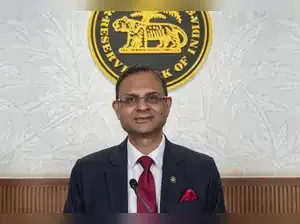
New Delhi: Reserve Bank's monetary framework shows steady follow up action to the Budget announcements, reinforces market confidence and provides boost to the manufacturing sector, opined experts on Friday.
The Reserve Bank of India kept its benchmark interest rate unchanged on Friday, as expected, as inflation remained at manageable levels and growth concerns eased following increased government spending in the Budget and reduced tariff pressures after a trade deal with the United States.
It's six-member Monetary Policy Committee (MPC) voted unanimously to keep the repurchase or repo rate at 5.25 per cent. RBI retained its neutral policy stance, signalling that it is likely to remain on hold for now.
Commenting on the policy, industry body Assocham President Nirmal Kumar Minda said that with inflation remaining within the tolerance band and growth momentum continuing, the RBI's neutral stance provides much-needed policy certainty for businesses and investors.
"Assocham believes that this prudent monetary framework will reinforce market confidence, boost manufacturing and trade activities, and enhance India's global competitiveness," Minda said.
Madan Sabnavis, Chief Economist, Bank of Baroda, said the policy has left repo rate unchanged as expected and hence the markets have been quite unaffected.
"In line with the push given by the Budget to MSMEs, the RBI has increased the limit for collateral-free loans to Rs 20 lakh. Hence there seems to be steady follow-up action to the Budget announcements," Sabnavis said.
Pradeep Aggarwal, Founder and Chairman, Signature Global (India) said the RBI's decision to hold the repo rate steady at 5.25 per cent offers stability for interest-rate-sensitive sectors like real estate in the current macroeconomic environment.
"With inflation remaining at manageable levels and the benefits of earlier rate cuts continuing to flow through to homebuyers in the form of improved affordability, residential demand has remained resilient," Aggarwal said.
Capri Global MD Rajesh Sharma said that equally important are the RBI's proposed regulatory measures focused on strengthening customer protection, improving digital payments security, and easing the cost of doing business across the financial sector.
The move to advancing financial inclusion boosting MSME credit and the proposed relaxation in branch expansion norms are positive steps that enhance operational efficiency without compromising systemic stability, Sharma said.
Vinod Francis, Chief Financial Officer, South Indian Bank, was of the opinion that the RBI's decision to keep the repo rate unchanged at 5.25 per cent while maintaining a neutral stance reflects confidence in a benign inflation outlook and resilient economic growth.
The upward revision in FY26 GDP growth, along with the RBI's assessment that system-level parameters for banks remain sound, reinforces confidence in the sector's ability to support sustained economic expansion, Francis said.
Loknath Panda, COO, BLS E-SERVICES, said that beyond rate action, the central bank's sharper focus on customer protection-through proposed guidelines on curbing mis-selling, responsible loan recovery practices, and enhanced safeguards against digital fraud-is a timely and progressive step.
Equally important is the planned review of the Business Correspondent framework, Lead Bank Scheme, and Kisan Credit Card model, which signals a stronger commitment to deepening financial inclusion and improving last-mile service delivery, Panda said.
Commenting on the policy, PB Fintech joint group CEO Sarbvir Singh said that as the focus now shifts toward liquidity management and improved transmission across lending rates, the current policy stance should help sustain momentum without overstimulating price pressures.
Resurgent India MD Jyoti Prakash Gadia said said the proactive action of RBI by way of fresh guidelines on customer service, mis-selling, protection in case of frauds and limited liability in electronic transactions augur well for the customer centric approach including for the senior citizens, Resurgent India MD Jyoti Prakash Gadia said.
Rajiv Sabharwal, MD and CEO, Tata Capital, said the proposed customer protection measures relating to mis-selling, recovery practices and limited liability in unauthorised transactions are constructive initiatives that would strengthen transparency and trust within the financial system.
Importantly, the proposed enhancement of the collateral-free MSME loan cap is a meaningful step towards improving credit access for small businesses and supporting formalisation, Sabharwal added.
The Reserve Bank of India kept its benchmark interest rate unchanged on Friday, as expected, as inflation remained at manageable levels and growth concerns eased following increased government spending in the Budget and reduced tariff pressures after a trade deal with the United States.
It's six-member Monetary Policy Committee (MPC) voted unanimously to keep the repurchase or repo rate at 5.25 per cent. RBI retained its neutral policy stance, signalling that it is likely to remain on hold for now.
Commenting on the policy, industry body Assocham President Nirmal Kumar Minda said that with inflation remaining within the tolerance band and growth momentum continuing, the RBI's neutral stance provides much-needed policy certainty for businesses and investors.
"Assocham believes that this prudent monetary framework will reinforce market confidence, boost manufacturing and trade activities, and enhance India's global competitiveness," Minda said.
Madan Sabnavis, Chief Economist, Bank of Baroda, said the policy has left repo rate unchanged as expected and hence the markets have been quite unaffected.
"In line with the push given by the Budget to MSMEs, the RBI has increased the limit for collateral-free loans to Rs 20 lakh. Hence there seems to be steady follow-up action to the Budget announcements," Sabnavis said.
Pradeep Aggarwal, Founder and Chairman, Signature Global (India) said the RBI's decision to hold the repo rate steady at 5.25 per cent offers stability for interest-rate-sensitive sectors like real estate in the current macroeconomic environment.
"With inflation remaining at manageable levels and the benefits of earlier rate cuts continuing to flow through to homebuyers in the form of improved affordability, residential demand has remained resilient," Aggarwal said.
Capri Global MD Rajesh Sharma said that equally important are the RBI's proposed regulatory measures focused on strengthening customer protection, improving digital payments security, and easing the cost of doing business across the financial sector.
The move to advancing financial inclusion boosting MSME credit and the proposed relaxation in branch expansion norms are positive steps that enhance operational efficiency without compromising systemic stability, Sharma said.
Vinod Francis, Chief Financial Officer, South Indian Bank, was of the opinion that the RBI's decision to keep the repo rate unchanged at 5.25 per cent while maintaining a neutral stance reflects confidence in a benign inflation outlook and resilient economic growth.
The upward revision in FY26 GDP growth, along with the RBI's assessment that system-level parameters for banks remain sound, reinforces confidence in the sector's ability to support sustained economic expansion, Francis said.
Loknath Panda, COO, BLS E-SERVICES, said that beyond rate action, the central bank's sharper focus on customer protection-through proposed guidelines on curbing mis-selling, responsible loan recovery practices, and enhanced safeguards against digital fraud-is a timely and progressive step.
Equally important is the planned review of the Business Correspondent framework, Lead Bank Scheme, and Kisan Credit Card model, which signals a stronger commitment to deepening financial inclusion and improving last-mile service delivery, Panda said.
Commenting on the policy, PB Fintech joint group CEO Sarbvir Singh said that as the focus now shifts toward liquidity management and improved transmission across lending rates, the current policy stance should help sustain momentum without overstimulating price pressures.
Resurgent India MD Jyoti Prakash Gadia said said the proactive action of RBI by way of fresh guidelines on customer service, mis-selling, protection in case of frauds and limited liability in electronic transactions augur well for the customer centric approach including for the senior citizens, Resurgent India MD Jyoti Prakash Gadia said.
Rajiv Sabharwal, MD and CEO, Tata Capital, said the proposed customer protection measures relating to mis-selling, recovery practices and limited liability in unauthorised transactions are constructive initiatives that would strengthen transparency and trust within the financial system.
Importantly, the proposed enhancement of the collateral-free MSME loan cap is a meaningful step towards improving credit access for small businesses and supporting formalisation, Sabharwal added.