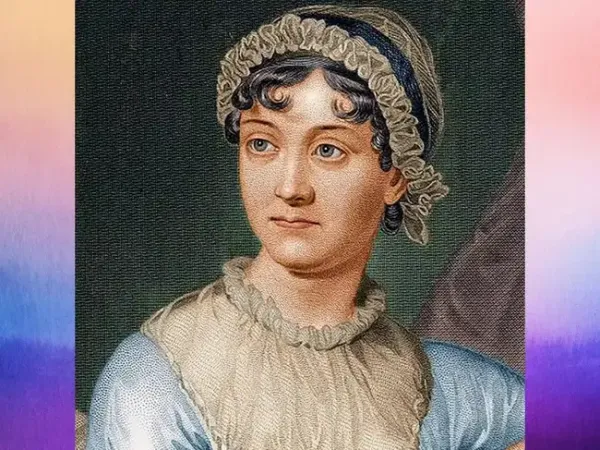
Picture this: a stuffy drawing room, where whispers of propriety stifle every bold impulse. Enter Jane Austen, wielding her pen like a sword, slicing through outdated notions of femininity.
Jane Austen (1775–1817), born in Steventon, Hampshire, as the seventh of eight children to a scholarly vicar and his witty wife, grew up in a lively household buzzing with letters and debate.
Self-taught via her father's library, she began writing juvenilia at 12, honing her satirical edge. Her works, including Pride and Prejudice, Sense and Sensibility, and Persuasion, are celebrated for their wit, social commentary, and memorable characters.
Persuasion, her sophisticated final novel, was revised in agony from Addison's disease, which claimed her at 41. Published posthumously by her brother Henry in 1818 (as "By a Lady"), it sold modestly then, but exploded later on, cementing her as literature's quiet revolutionary.
Quote of the day: "Hate to hear you talk about all women as if they were fine ladies instead of rational creatures. None of us want to be in calm waters all our lives."
Spoken by the spirited Anne Elliot in Persuasion, this line cuts through outdated stereotypes like a swift tide. Austen rejects the notion that women are fragile "fine ladies", delicate ornaments meant only for admiration and ease.
Instead, she insists they are "rational creatures," equipped with sharp minds, emotions, and a craving for adventure. The metaphor of rejecting "calm waters" evokes a sailor's life: women, too, yearn for the thrill of storms, challenges, and real growth, not a stagnant, sheltered existence.
This wasn't just clever wordplay; it was Austen's quiet rebellion. In Regency England, where women faced rigid expectations of marriage and domesticity, she championed their inner fire, rationality paired with a hunger for life's tempests.
Today, it resonates as a call to embrace complexity, whether in careers, relationships, or personal risks. Why settle for smooth sailing when the waves build true strength?
Jane Austen (1775–1817), born in Steventon, Hampshire, as the seventh of eight children to a scholarly vicar and his witty wife, grew up in a lively household buzzing with letters and debate.
Self-taught via her father's library, she began writing juvenilia at 12, honing her satirical edge. Her works, including Pride and Prejudice, Sense and Sensibility, and Persuasion, are celebrated for their wit, social commentary, and memorable characters.
Persuasion, her sophisticated final novel, was revised in agony from Addison's disease, which claimed her at 41. Published posthumously by her brother Henry in 1818 (as "By a Lady"), it sold modestly then, but exploded later on, cementing her as literature's quiet revolutionary.
Quote of the day: "Hate to hear you talk about all women as if they were fine ladies instead of rational creatures. None of us want to be in calm waters all our lives."
Spoken by the spirited Anne Elliot in Persuasion, this line cuts through outdated stereotypes like a swift tide. Austen rejects the notion that women are fragile "fine ladies", delicate ornaments meant only for admiration and ease.
Instead, she insists they are "rational creatures," equipped with sharp minds, emotions, and a craving for adventure. The metaphor of rejecting "calm waters" evokes a sailor's life: women, too, yearn for the thrill of storms, challenges, and real growth, not a stagnant, sheltered existence.
This wasn't just clever wordplay; it was Austen's quiet rebellion. In Regency England, where women faced rigid expectations of marriage and domesticity, she championed their inner fire, rationality paired with a hunger for life's tempests.
Today, it resonates as a call to embrace complexity, whether in careers, relationships, or personal risks. Why settle for smooth sailing when the waves build true strength?